
Kubernetes v1.36: What’s New, Features, Changes & Upgrade Guide
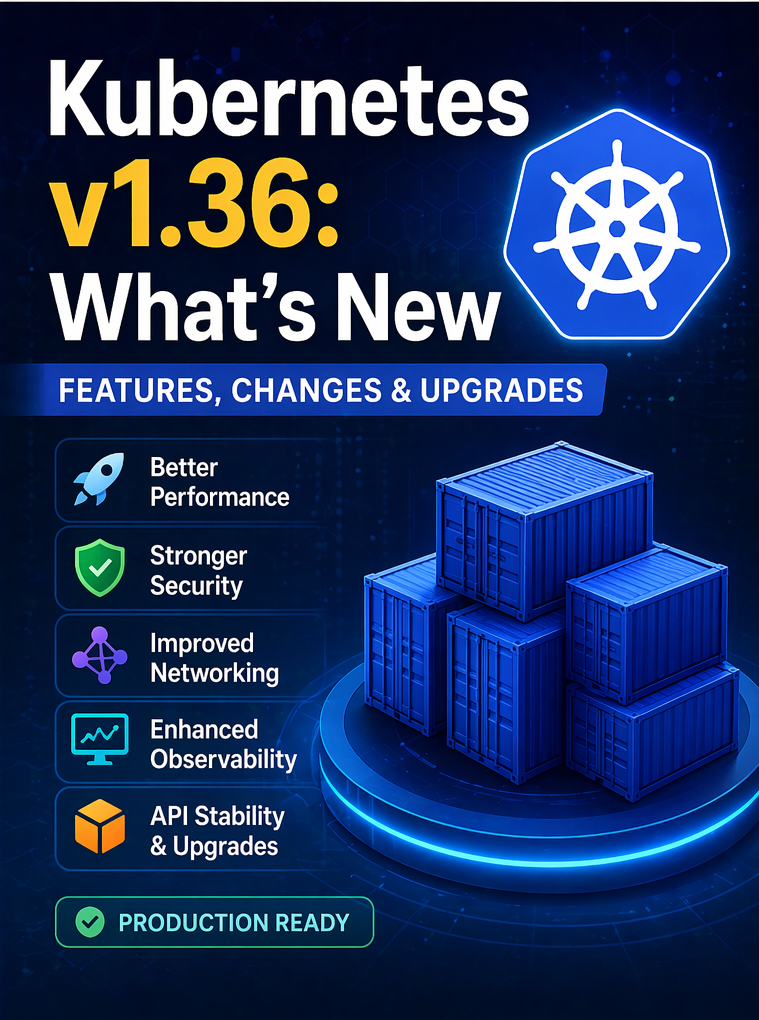
Each Kubernetes release brings improvements that directly impact performance, scalability, and operational simplicity. If you’re running clusters in production, staying updated is not optional.
Kubernetes v1.36 introduces several meaningful enhancements across scheduling, networking, security, and observability. While it may not be a “headline-heavy” release, it focuses heavily on stability, efficiency, and production readiness.
In this guide, we’ll break down everything you need to know about Kubernetes v1.36 in plain English, including:
- New features and improvements
- Deprecated APIs and changes
- Real-world impact on clusters
- Upgrade strategy and best practices
What is Kubernetes?
Before diving into updates, a quick refresher:
Kubernetes is a container orchestration platform that helps you:
- Deploy applications
- Scale workloads
- Manage containers
- Automate infrastructure
It has become the standard for modern cloud-native applications.
Key Highlights of Kubernetes v1.36
Kubernetes v1.36 focuses on:
- Better resource efficiency
- Improved security defaults
- Enhanced networking capabilities
- More stable APIs
1. Improved Resource Management
One of the biggest improvements in Kubernetes v1.36 is smarter resource handling.
What Changed?
- More efficient CPU and memory scheduling
- Better bin-packing for nodes
- Reduced resource wastage
Why It Matters
In real-world clusters:
👉 You can run more workloads on the same hardware
👉 Lower infrastructure costs
2. Enhanced Pod Scheduling
Scheduling is the heart of Kubernetes, and v1.36 improves it further.
New Improvements
- Smarter placement algorithms
- Better handling of large clusters
- Improved affinity/anti-affinity logic
Real Impact
- Faster pod scheduling
- Better workload distribution
3. Networking Enhancements
Networking continues to evolve in Kubernetes v1.36.
Key Updates
- Improved service routing
- Better load balancing
- Enhanced network policy performance
Why This Matters
- Lower latency
- More reliable connections
- Better traffic control
4. Security Improvements
Security is always a top priority.
What’s New
- Stronger default security settings
- Improved RBAC controls
- Better secret handling
Real Benefit
👉 Reduced attack surface
👉 Safer multi-tenant environments
5. API Stability and Deprecations
Kubernetes continues cleaning up older APIs.
Changes in v1.36
- Removal of deprecated APIs
- Promotion of stable APIs
- Improved backward compatibility
What You Should Do
- Check your manifests
- Update deprecated resources
6. Observability Improvements
Monitoring and debugging are easier now.
Enhancements
- Better metrics
- Improved logging
- More visibility into cluster behavior
7. Storage Enhancements
Storage reliability is critical.
Updates
- Improved CSI driver support
- Better volume management
- More stable persistent storage
8. Performance Gains
Performance improvements across the board:
- Faster cluster operations
- Reduced API server load
- Improved scalability
Kubernetes v1.36 vs Previous Versions
| Feature | v1.35 | v1.36 |
|---|---|---|
| Scheduling | Good | Improved |
| Security | Strong | Stronger |
| Performance | Stable | Optimized |
| APIs | Some deprecated | Cleaner |
Should You Upgrade to Kubernetes v1.36?
Yes, if:
- You run production workloads
- You want better performance
- You need latest security fixes
Upgrade Strategy (Step-by-Step)
1. Check Compatibility
Ensure your tools support v1.36.
2. Backup Cluster
Always take backups.
3. Upgrade Control Plane
4. Upgrade Worker Nodes
5. Test Applications
Common Upgrade Mistakes
- Skipping backups
- Ignoring deprecated APIs
- Not testing workloads
Best Practices
- Always test in staging
- Monitor cluster after upgrade
- Use rolling updates
Real-World Insight
Most production issues happen due to:
👉 outdated clusters
👉 deprecated APIs
👉 poor upgrade planning
FAQs
Is Kubernetes v1.36 stable?
Yes, production-ready.
Does it improve performance?
Yes, especially in scheduling and resource usage.
Final Thoughts
Kubernetes v1.36 is not just about new features — it’s about refinement, efficiency, and production stability. If you’re running Kubernetes seriously, upgrading is a smart move.